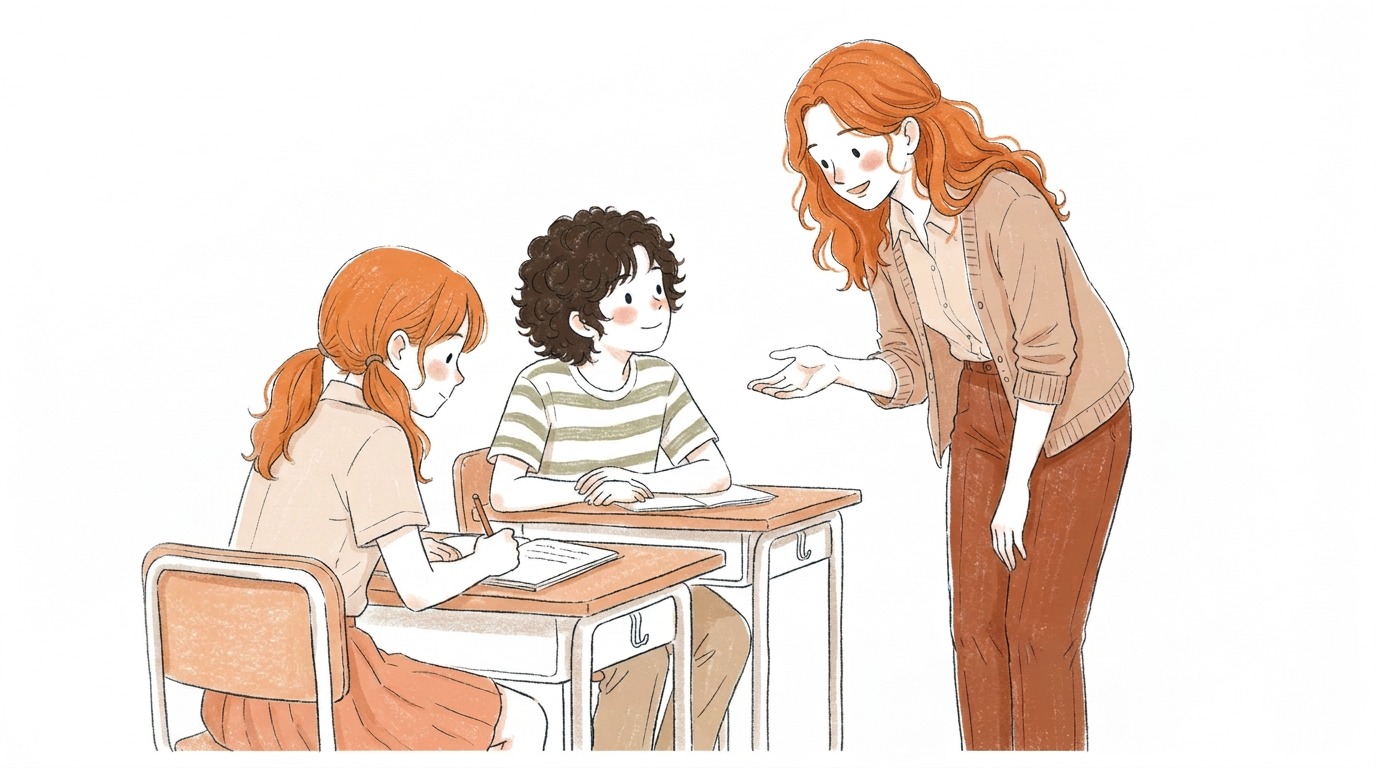
Rehearse the 3-step questioning method before facing real classroom conflicts. Practice with scenarios or bring your own dilemma. 100% Free. No sign-up required.
Your original input is not retained by the app; it is used to generate AI feedback.
What happens to what you type
Your input is sent to the server to generate AI feedback, but the app does not retain original input or non-anonymized answers. With your save consent, the case and its AI answer are anonymized together, reviewed by you, then saved for administrators to improve teaching guidance. Rating alone does not save a case or answer. PDFs are generated in your browser and are not stored on the app server. They may include your input; keep them as private records. Newsletter emails are stored separately only when you subscribe.
The 3S Questioning Method
The 3S method helps you see yourself objectively, gauge your direction clearly, and complete your life on your own terms — the core questioning method of PlusZone education. The core and example questions below are the book's own wording.
1Seeing Yourself Clearly
“Why did you do that? Why did you say (act) like that?”
The teacher asks questions that help the student realise their own current value standards — so the child comes to see their own mindset and thoughts, rather than blaming the other person.
The student discovers the cause behind unconscious thoughts and feelings.
2Setting a Plus Standard
“Is it right or wrong to say (or act) like that?”
Having recognised the problem, the student judges right and wrong and thinks about why, so their value standards are reorganised. They see clearly how an unconscious belief harms themselves and others.
The student reviews and judges value standards for themselves, and chooses the value to act on.
3Putting the Standard into Action
“So, what should you do next?”
With the value standard clarified, the student chooses for themselves how to live it and sets a concrete plan for what comes next. Because the choice is their own, it is far more likely to be put into action.
The standard the student judged to be right moves naturally into real action.
Plus, Zero and Minus are not a verdict on the child or on feelings — they are a way of looking back at the thought and choice of the moment. Feelings themselves are never sorted into good and bad; once a feeling is understood, the next thought and action are chosen by the child.
@
We collect your email address to send character education materials and newsletters. It is retained for one year after signup, then removed by daily automatic cleanup. Subscribing is optional and does not affect access to practice. Cancellation requests also allow earlier deletion.
To unsubscribe, email pluszoneedu@gmail.com from the address you subscribed with, with ‘Unsubscribe’ in the subject.